
A split steering rack boot and an oil stain are different observations. Before ordering parts, record what is damaged and ask the workshop to identify the cause. A new bellows can restore a protective cover, but it does not repair a leaking internal rack seal or a worn joint.
1. Record tears, loose ends and clamp condition
Photograph the complete boot in position, both mounting ends and any visible split. Note whether a clamp is missing or the boot has moved away from its retaining groove. Dirt near an opening is useful evidence for the workshop; a clean exterior alone does not confirm that the protected area is clean.
The purpose of the cover matters more than its appearance: it must continue to keep contamination out while accommodating steering movement. The UK inspection manual distinguishes deterioration from a cover that no longer prevents dirt entry. This is useful inspection context, not a universal repair instruction for every vehicle.
2. Do not diagnose an internal leak from a stain alone
On a hydraulic steering rack, an oily boot needs diagnosis rather than an assumption. Record any reported fluid loss and visible external leaks. A GM bulletin for specific older vehicle models describes boot staining from liquefied assembly grease, which can be mistaken for seal leakage. Its model-specific procedure must not be applied automatically to other racks.
Ask a qualified workshop to distinguish grease, external contamination and steering fluid using the vehicle-specific service information. If an internal leak or joint damage is confirmed, the repair scope goes beyond replacing the dust cover. Do not treat a tighter clamp as a remedy for an internal hydraulic leak.
3. Match the replacement to the original assembly
For a purchasing enquiry, provide the rack identification, original reference, small-end and large-end mounting diameters, free length, and photographs of the retention features. Include any vent connection or other feature present on the original. Keep the original markings separate from your own measured dimensions.
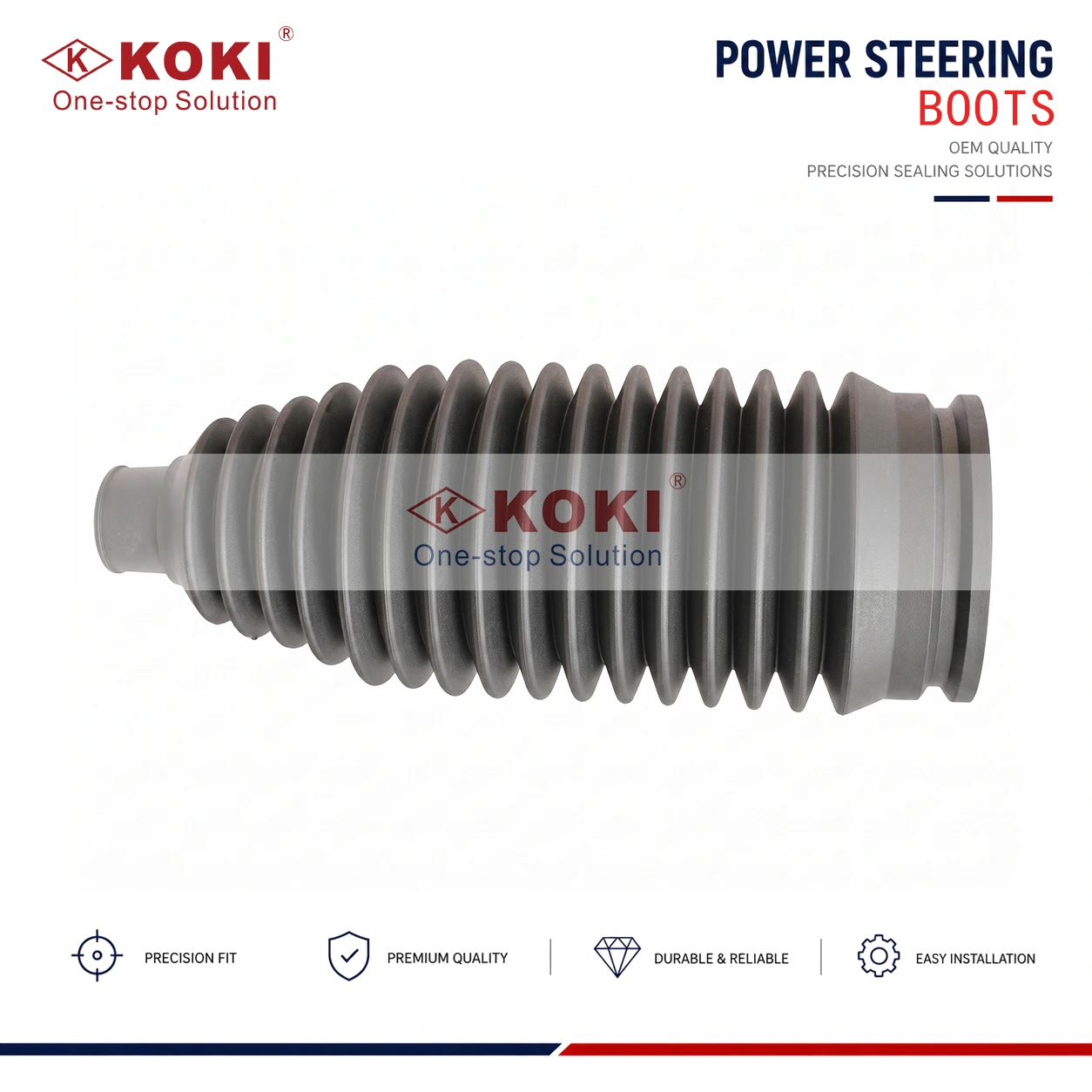
For an example, view the existing KOKI KSB-02 product page. Use the listing to discuss a candidate with the supplier; it does not establish vehicle fitment by appearance. Compare the original assembly and confirmed reference before ordering.
4. Send a useful enquiry, not just a damaged-part photo
Include separate photos of the damage and the complete original part, its identification, dimensions and the quantity required. State whether the workshop has confirmed a cover-only replacement or a wider rack repair. This helps the supplier quote the intended parts without mistaking a damaged cover for a confirmed seal failure.
Read the boot selection guide for matching details, or send your original reference and photos to KOKI.